

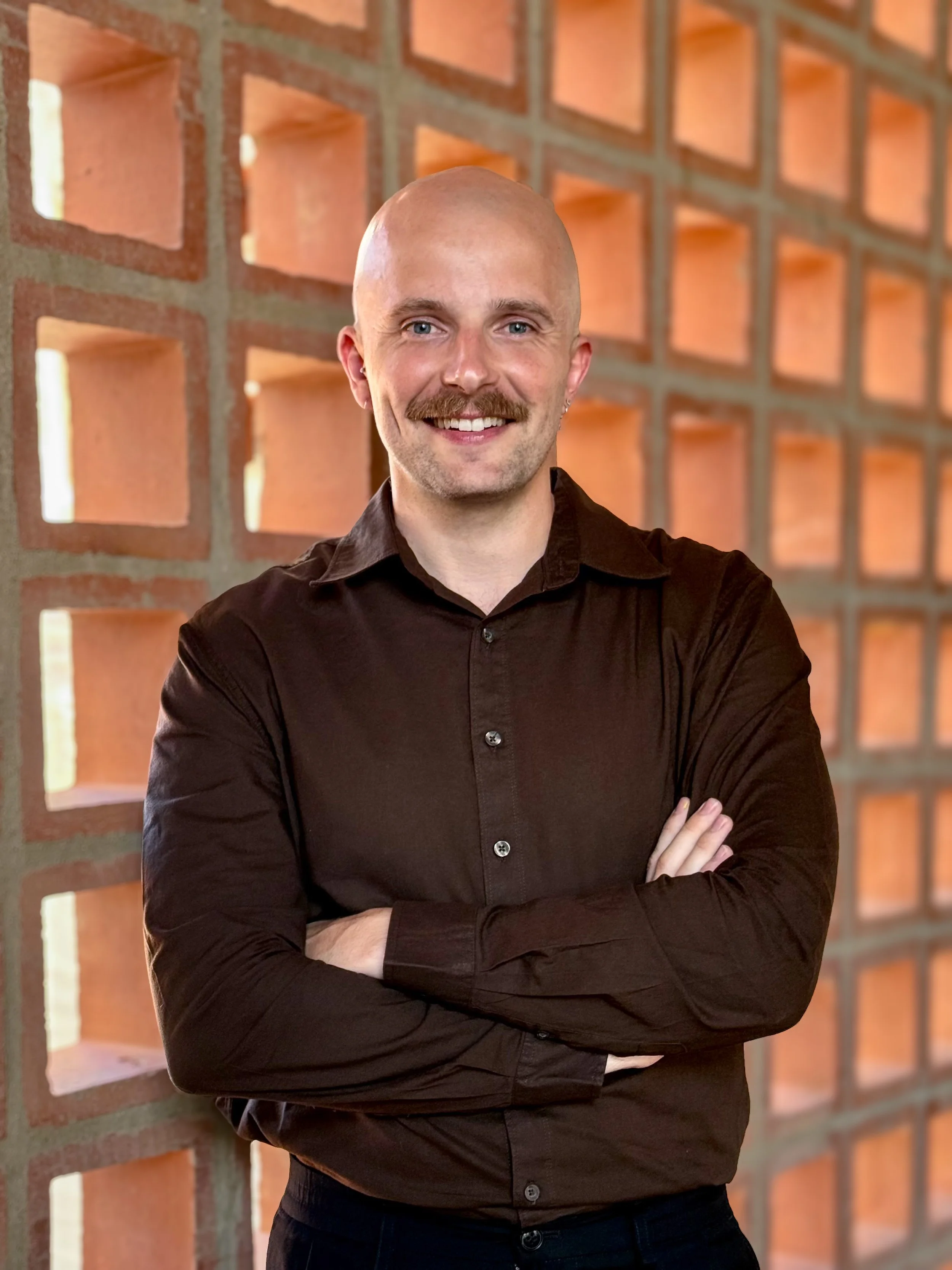
Matthew Parent
Q.Med · MSC · PRINCIPAL, EARTH RESOLVE SOLUTIONSMatthew Parent is the founder of Earth Resolve Solutions, a mediation, facilitation, and consulting practice that helps parties move forward together on decisions they cannot make alone.
He works with Indigenous governments and organizations, territorial and federal departments, industry proponents, and mission-driven organizations. He has sat with hunters and trappers associations, ministers and deputy ministers, federal negotiators, mine permitting staff, community justice committees, elders and youth delegates, humanitarian field teams, and multinational executives at the negotiating table. His files have involved land, water, energy, infrastructure, justice, and community wellbeing.
He was lead advisor and author of the Nunavut Inuit Climate Action Plan for Nunavut Tunngavik Incorporated, and has advised Inuit Circumpolar Council Canada, Makivik Corporation, and the Government of Nunavut. He designed and facilitated 25 community engagements in 25 fly-in Inuit communities across the Arctic. Earlier he represented the Government of Canada in decarbonization negotiations with multinational companies, coordinated Canada's participation in international climate negotiations, co-authored the business case for the Climate Smart programme at Doctors Without Borders, and served the Government of Nunavut as Manager of Climate Change Mitigation and then as Director of Community Justice.
Matthew's approach is what he calls Facilitated Relationality. Most of what the world needs is already invented, funded, or written down somewhere, and it stalls because the relationships required to carry it were never built. He works on those relationships first, so that the people who will live with a decision have a hand in shaping it and the agreement still stands years after the room empties.
His commitment is to processes that hold: where rights are respected rather than traded away, where self-determination is real rather than consulted upon, and where the land and water are treated as party to the decision rather than as the subject of it. He is committed to supporting a world where individuals, organizations and communities are better able to navigate their own conflicts, and toward a future the generations after us can actually inherit.
Matthew is a Qualified Mediator with the ADR Institute of Canada. He holds an MSc in Integrated Water Resources Management from McGill University, a BA in Justice Studies from Royal Roads University, and executive certificates in negotiation and in mediation from Harvard's Program on Negotiation. He works in English, French, and Spanish.
THE FOUNDATION OF MY WORK:
Facilitated Relationality
Almost everything the defence, climate, infrastructure, water, land and major-project files need already exists. The technology is proven, the policy options are written down, and the money is largely identified. What actually decides whether any of it gets built is whether the people who have to act can work together well enough to reach a decision and then keep it once the meeting has ended and the pressure has moved on.
Facilitated relationality is my name for treating that capacity as the infrastructure and substance of the work rather than as a pleasant by-product of it. Conventional process treats relationship as something that either exists or does not, and then designs around whatever it finds. I design to build it, deliberately and while the substantive work is underway, because a group that can hold disagreement is worth more to its own future than any single agreement it might sign.
In practice this means three things. Parties are required to state each other's interests to that party's satisfaction before advancing their own, which is slower at the start and considerably faster afterwards. The interests of those who cannot speak in the room, are also named openly. And the group leaves with an agreed way of working through the next disagreement, not only a resolution of this one.
Durable, in my usage, therefore means considerably more than signed. It means the outcome holds over time, it prevents conflict that would otherwise have surfaced later, the group has a way to work through the conflict that surfaces anyway, and the way of working stays efficient enough that people keep showing up to it.
Recent Mandates
Mediator (Nunavut Human Rights Tribunal).
Lead Advisor & Author, Nunavut Inuit Climate Action Plan — territory-wide design & facilitation (Nunavut Tunngavik Inc., NTI).
Circumpolar Inuit & Canadian Indigenous Climate Action Strategy Implementation Process Review (NTI)
Governance Architect, Nunavut Climate Governance Regime (NTI)
Author, Inuit Climate Leadership Agenda (NTI)
Inuit Climate Advocacy Toolkit (Inuit Circumpolar Council of Canada, ICC)
Advisor, Inuit Climate Action Partnership (ICC)
Community Mediator (Équijustice)
Policy Advisor, Canada Water Act Amendments (Makivvik Corporation)
Facilitator, Contaminated Sites Working Group (Government of Nunavut)
Advisor, Nunavut Water Strategy & Transboundary Water Management (Government of Nunavut)
Lead Researcher, Nunavut Energy Landscape Analysis (NTI)
What I Believe
Pluripartiality: I don't pretend to be a blank slate. I bring genuine care for every party at the table (their interests, their history, what they're actually up against) without losing sight of the process or the desired outcome.
Cooperation over conflict: Most of what I do is about building the conditions where disputes don't derail important work. The goal is always a durable cooperation that goes along with the signed agreement or project launch.
Relationships as infrastructure: Strategies only succeed when the relationships underneath can hold the weight. I pay as much attention to how people are working together as to what they're deciding.
Outcomes that are actually implemented: I work to make sure the people who have to live with a decision had a real hand in shaping it so that implementation sticks and works.
Conflict navigation is a precondition: By the time most people call a mediator, a lot has already been lost… time, trust, momentum. The most effective conflict work happens earlier by identifying where tensions are likely to surface, designing processes that can hold them, and building the relational conditions that keep disagreements from becoming crises. I work at both ends. The upstream prevention and active navigation when things do break down. The goal is always that your project, strategy, or initiative actually succeeds.